The short answer
Choose dining room art that spans about two-thirds of your table length (60 to 75% works), hang it so its centre sits around 140 to 155 cm from the floor with the bottom edge roughly 25 to 35 cm above the table top, and match the shape to the table: landscape or a pair over a long rectangular table, portrait over a round or square one. For a 180 to 200 cm table, an 83 × 118 cm landscape print is usually the sweet spot. Framed behind glass is the practical choice in a room with steam, sauce and little hands.
The dining room is the one room where people sit still and look at the same wall for an hour. That makes it the best place in the house for a single, confident piece of art, and also the place where a wrong size or height is most obvious. A print that looked generous in the shop can shrink to a postage stamp above a 2.4 metre table, and art hung at standing eye height can disappear behind a pendant light the moment everyone sits down.
This guide gives you the numbers: how wide, how high, which orientation for which table, how to work around pendants, windows and sideboards, and what it costs at each size. Every measurement below is worked from real table sizes found in Australian homes.
Step 1: Measure the table, not the wall
In a living room you size art to the sofa. In a dining room, the anchor is the table (or the sideboard, if the art hangs above one). The wall is usually far wider than either, so if you size to the wall you will almost always go too big or end up floating a lonely print in a sea of plaster.
- Measure the table top length along the wall you are hanging on. If the table sits side-on to the wall, use the long side. If the end of the table faces the wall, use the table width instead.
- Multiply by 0.66 to get your target art width. Anything from 0.6 to 0.75 looks intentional.
- Allow for the border and frame. Every Contemplo print has a 5 cm white border around the image, so the finished piece reads about 10 cm wider and taller than the image size, plus the frame moulding.
- Tape it out. Mark the outline on the wall with painter's tape and sit in a dining chair before you commit. Seated is how you will see it most.
Worked example: a 200 cm six to eight seater
200 × 0.66 = 132 cm target. An 83 × 118 cm landscape print has a 118 cm image, so with its border it reads about 128 cm across before the frame. That lands at roughly two-thirds of the table, which is exactly where you want it. A 66 × 87 cm landscape piece (about 97 cm across with border) would sit at under half the table length and look timid from the far end of the room.

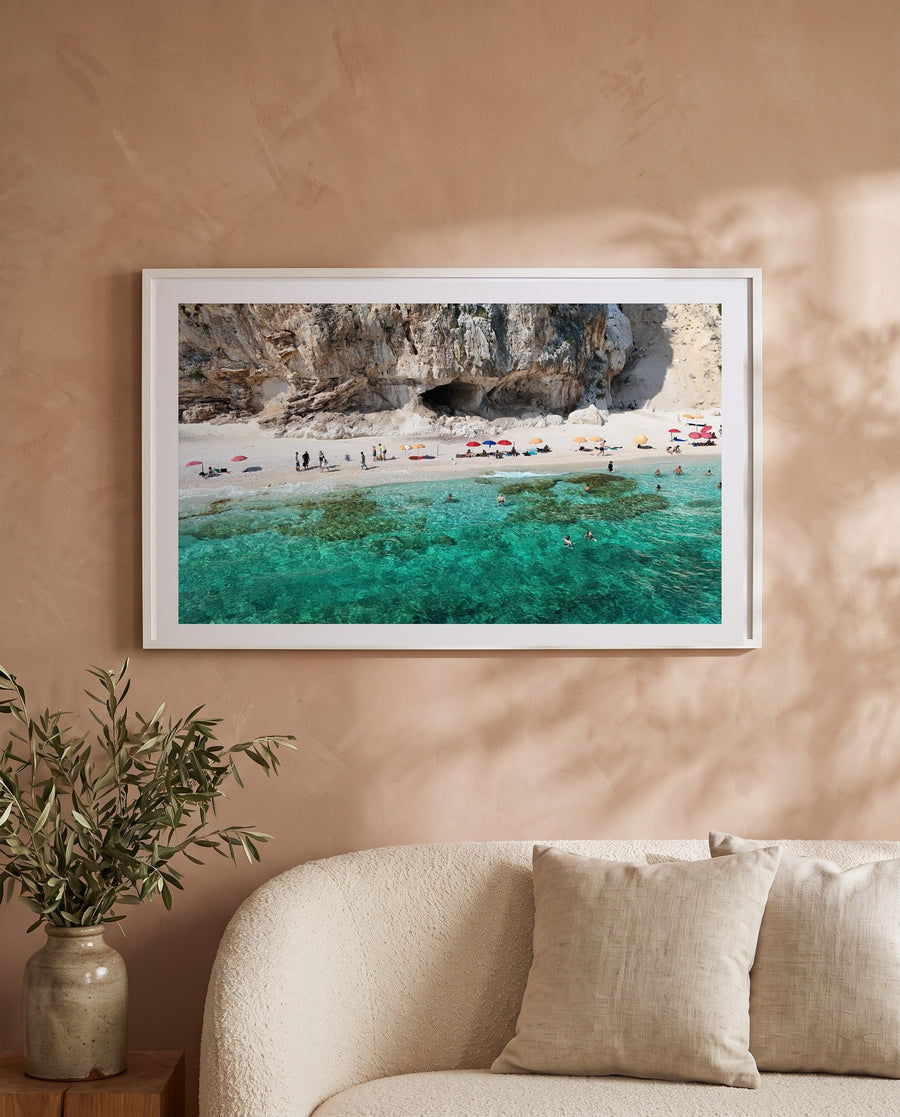
A single landscape piece spanning about two-thirds of a long table. Shown: Portofino From Above, framed in white.
Dining room art size chart
Use this as a starting point. Image sizes are in centimetres; prices are AUD including GST.
| Your table | Target art width | Best fit | Unframed / framed |
|---|---|---|---|
| Round or square, 90 to 120 cm | 55 to 85 cm | 47 × 66 or 66 × 87, portrait | $229 / $539 or $279 / $699 |
| Rectangular 4 to 6 seater, 140 to 160 cm | 85 to 110 cm | 66 × 87, landscape | $279 / $699 |
| Rectangular 6 to 8 seater, 180 to 210 cm | 110 to 140 cm | 83 × 118, landscape | $329 / $999 |
| Long 8 to 10 seater, 220 to 260 cm | 145 to 180 cm | 100 × 150, landscape, or a pair of 66 × 87 | $499 / $1,459, or pair $499 / $1,259 |
| Banquet or extended table, 260 cm plus | 170 cm plus | Pair of 83 × 118 or 100 × 150 | Pair $589 / $1,799, or $899 / $2,629 |
Pairs are about 10% less than buying two singles. If you are weighing up one big piece against two, our guide to styling a pair of prints covers spacing and which images talk to each other. For sizing other rooms, see the full wall art size guide.
Step 2: Get the height right for people sitting down
The gallery standard is to centre art at 145 to 150 cm from the floor, which suits a hallway where everyone is standing. Dining rooms are different: most of the viewing happens from a seated eye height of around 115 to 120 cm. You still want the art to relate to the room when you walk in, so the trick is to stay at the lower end of the normal range and keep the art visually connected to the table.
- Centre point: 140 to 155 cm from the floor, depending on the art's height. Taller pieces sit with their centre a little higher so the bottom edge doesn't crowd the table.
- Bottom edge: about 25 to 35 cm above the table top. A standard dining table is 75 cm high, so that puts the bottom of the frame around 100 to 110 cm from the floor.
- Chair backs: high-backed chairs on the wall side can reach 90 to 100 cm. Make sure the bottom of the frame clears them by at least 10 cm or the chairs will cut into the picture all night.
Worked example: the height maths
You have a framed 66 × 87 cm landscape print. With its border it is about 76 cm tall before the frame. Table top at 75 cm, plus a 30 cm gap, puts the bottom edge at 105 cm. Add the height and the centre lands at roughly 145 cm. That is comfortable from a chair and still reads correctly from the doorway.
If you need help with hooks, wire and getting it level first time, our guide to hanging wall art walks through it step by step.
Checklist
- Table length measured along the hanging wall
- Target width = table length × 0.66 (border and frame included)
- Bottom edge 25 to 35 cm above the table top
- Centre between 140 and 155 cm from the floor
- Art centred on the table, not on the wall (if they differ)
- Pendant checked from a seated position
- Window reflections checked at the time you usually eat
- Outline taped on the wall and viewed from a chair
Step 3: Match the shape to the table
The shape of the art should echo the shape of the furniture beneath it. It is the single fastest way to make a dining room feel designed rather than decorated.
- Long rectangular table: a landscape print, or two portrait prints side by side. Both carry the horizontal line of the table up the wall.
- Round or oval table: one portrait piece. A tall shape balances the circle and stops the wall feeling empty above the centre.
- Square table: portrait, or a square-ish landscape such as 66 × 87 cm turned on its side.
- Table in a narrow nook or banquette: portrait every time. Landscape art in a tight space tends to touch the corners of the room visually.

A strong portrait image suits a round table or a breakfast nook. When the Coast Illuminates, Positano at dusk, a fitting mood for evening meals.
Step 4: Work around pendants, windows and sideboards
Pendant lights
Most dining pendants hang 75 to 90 cm above the table top. From a seated position, a large shade can block the middle third of the art. Sit at the far end of the table and look at your taped outline. If the pendant cuts through the centre of the image, either raise the art slightly so the shade sits below its focal point, or choose an image whose interest is spread across the frame (aerial coastlines and wide beach scenes work well) rather than one with a single subject dead centre.
Windows and glass glare
Dining rooms in Australian homes often open onto a deck or garden, which means big windows opposite the art. Standard glass will reflect them. If the wall faces bright glazing, ask us about Non-Reflective, UV Clear or Museum UV Non-Reflective glass (museum glass blocks 70% of UV and reflects under 1%). These are quoted on request. On our 83 × 118 and 100 × 150 cm frames, shatter-resistant acrylic is standard, which is also reassuring above a table where people gather.
Sideboards and buffets
If the art hangs above a sideboard instead of the table, size it to the sideboard: about two-thirds of its length, with the bottom edge 20 to 25 cm above the top. A 180 cm sideboard suits a 66 × 87 or 83 × 118 cm landscape print. Leave room for a lamp or a bowl at one end so the piece and the objects don't compete.
Step 5: Choose colour and subject that suit a dining room
Art over a table becomes the backdrop to every meal, so it pays to think about mood as well as size.
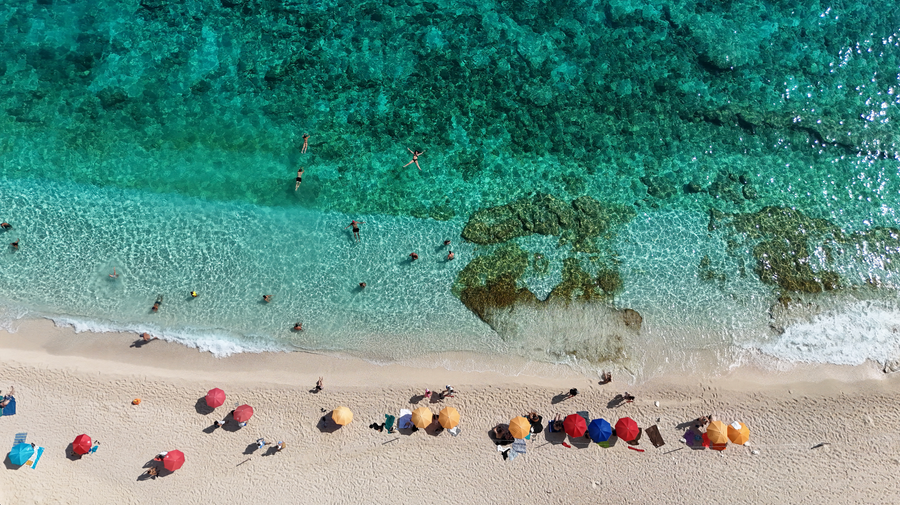
- Blues and greens are calming and flatter food and timber tones. Sea-from-above images, like our From Above collection, read almost like texture from across the room and reward a closer look.
- Warm colour and movement (beach umbrellas, busy beach clubs) bring energy to a room used for long lunches and parties.
- Pick one or two colours from the room: the timber of the table, a linen runner, a rug or the chairs. If the print repeats one of them, it will look chosen for the room.
- Keep it to one statement. In most dining rooms a single large piece beats a gallery wall. People face it for long periods, and a calm focal point is easier to live with than many small frames.

For a lively, long-lunch kind of dining room. Endless Summer, Amalfi Coast.
Framed or unframed for a dining room?
We recommend framed for most dining rooms. Glass or acrylic protects the paper from steam, splashes and fingerprints, and a wipe with a soft cloth is all it needs. Our framed prints arrive in a white timber frame, ready to hang. Black, natural oak or bespoke timbers can be quoted on request if your table or chairs suggest a different finish.
If you prefer to frame locally, unframed prints are made to order on archival fine art paper and ship free with tracking Australia-wide. Our framed vs unframed guide covers the trade-offs, and the framing page has the details of each option.
Common dining room art mistakes
- Too small for the table. The most common mistake by far. Under half the table length looks like an afterthought.
- Hung at standing height. Art centred at 160 cm or more floats away from the table and feels disconnected once you sit.
- Centred on the wall instead of the table. If the table is off-centre on the wall, centre the art on the table. The table is what the eye links it to.
- Ignoring the pendant. Check sightlines from a seated position before you drill.
- Hanging above a hot servery or near a cooktop. Keep art out of direct steam and heat. For more on humidity and sun, read our care guide for coastal homes.
- Too many small pieces. A cluster of small frames over a table often reads as clutter at dinner. Go for one large piece or a balanced pair.
Shop the edit


Frequently asked questions
What size art should go above a dining table?
Aim for art about two-thirds the length of the table, including the border and frame. For a 160 cm table that is a 66 × 87 cm landscape print; for a 180 to 210 cm table, an 83 × 118 cm landscape print; for tables of 220 cm and longer, a 100 × 150 cm framed piece or a pair.
How high should I hang art in a dining room?
Keep the bottom edge about 25 to 35 cm above the table top and the centre of the art around 140 to 155 cm from the floor. That is slightly lower than you would hang art in a hallway, because most people view dining room art while seated.
Should dining room art be landscape or portrait?
Landscape (or a pair of portraits) above a long rectangular table; a single portrait above a round, square or banquette table. Matching the shape of the art to the table is what makes the arrangement look deliberate.
Is a large print safe above a table where children sit?
Our 83 × 118 and 100 × 150 cm frames use shatter-resistant acrylic rather than glass, and every framed print arrives ready to hang. Use two hooks rated for well above the frame's weight, fixed into studs or with the right wall anchors, so the frame stays level and secure.
How long does a dining room print take to arrive?
Each print is made to order in 5 to 10 business days (framed takes a little longer). After dispatch, unframed prints take 2 to 7 business days and ship free with tracking Australia-wide. Framed prints take 7 to 10 business days, and are delivered free, fully insured.
Can I see how it will look on my wall before I order?
Yes. Send us a photo of your dining wall and we will mock up any print at true scale, free. It is the easiest way to settle the size question before you commit.
Measuring up your dining room? Send us a photo of the wall and the table length and we'll mock up any print at true scale, free. Request a free mock-up or try the wall tool.
← Older post Newer post →